
Blood sugar management is an important part of long-term health. Alongside medical care, a balanced diet, regular physical activity and appropriate monitoring can help people make informed decisions about their wellbeing.
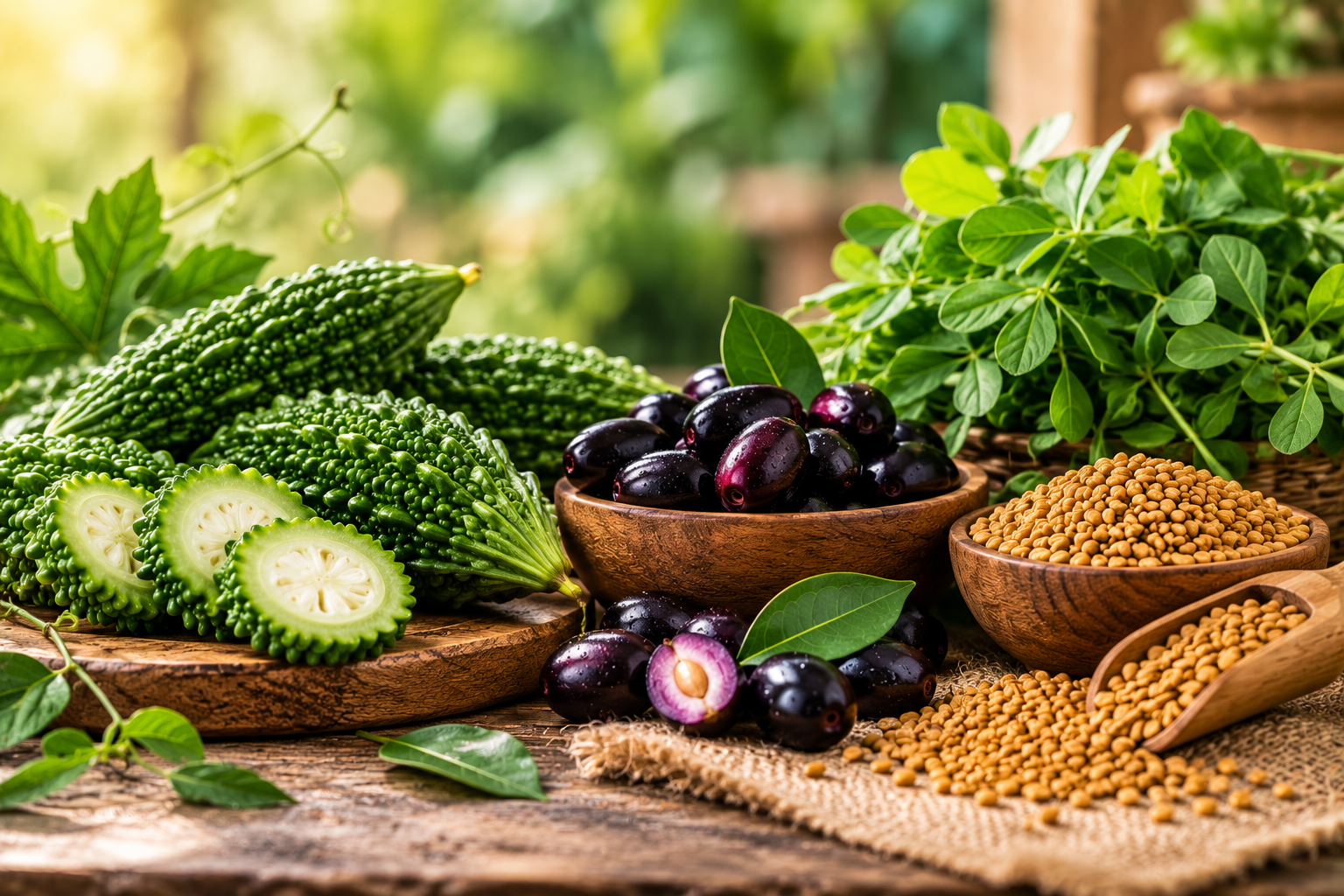
In traditional Indian diets and Ayurvedic practices, ingredients such as karela, jamun and methi have long been valued. Today, researchers are also studying these ingredients to understand their possible effects on blood glucose.
But how much do we know about them? Can these traditional ingredients replace diabetes medication? And what precautions should you consider?
In this guide, Vedara Organics explores the traditional uses, available research and safety considerations associated with karela, jamun and methi.
1. Karela (Bitter Gourd): A Traditional Indian Vegetable
Karela, also known as bitter gourd, is commonly used in Indian cooking. It contains fibre and other naturally occurring plant compounds.
Potential nutritional benefits
- Provides dietary fibre when eaten as part of a balanced diet.
- Adds variety to vegetable-rich meals.
- Contains naturally occurring plant compounds that researchers continue to study.
Karela has also been investigated for its possible effects on blood glucose. However, current research is limited, and there is not enough reliable evidence to conclude that karela supplements effectively manage diabetes. <Cite refs={[“turn569170search0″,”turn569170search2”]}/>
How to include it: Enjoy karela as part of a balanced meal, prepared according to your dietary preferences. Do not assume that karela juice, extracts or supplements have the same effects as eating the vegetable.
2. Jamun: A Fruit With Traditional Wellness Uses
Jamun, commonly known as Indian blackberry, is a seasonal fruit enjoyed across India. Its seeds have also been used in traditional wellness preparations.
What makes jamun interesting?
- The fruit provides dietary fibre and naturally occurring plant compounds.
- It can be enjoyed as part of a varied, balanced diet.
- Jamun seeds are traditionally used in some Ayurvedic preparations.
Jamun seed extracts are sometimes promoted for blood sugar support. However, traditional use alone does not prove that these preparations are effective or safe for treating diabetes. Reliable clinical evidence for specific jamun products remains limited.
How to include it: Enjoy the fruit in suitable portions as part of your regular diet. If you have diabetes, consider your overall carbohydrate intake and follow the dietary advice provided by your healthcare professional.
3. Methi (Fenugreek): A Common Kitchen Ingredient
Methi, or fenugreek, is widely used in Indian cooking. Both its leaves and seeds are familiar ingredients in traditional meals.
Fenugreek seeds contain fibre and other naturally occurring compounds. Researchers have investigated whether fenugreek supplements may influence blood glucose levels.
Some studies suggest possible benefits, but the quality of evidence varies. The US National Center for Complementary and Integrative Health notes that there is not enough high-quality evidence to establish fenugreek as an effective treatment for diabetes. <Cite refs={[“turn569170search1″,”turn569170search6”]}/>
How can you use methi in everyday meals?
- Add fresh methi leaves to vegetables or dal.
- Use fenugreek seeds in cooking.
- Include methi as part of a varied diet rather than relying on it as a treatment.
Concentrated supplements and large quantities may cause digestive discomfort or lower blood glucose excessively, particularly when combined with certain medicines. Consult a healthcare professional before taking fenugreek supplements.
Karela vs Jamun vs Methi: What Should You Know?
| Ingredient | Traditional use | Important consideration |
|---|---|---|
| Karela | Vegetable in everyday meals and traditional wellness practices | Supplement evidence remains limited |
| Jamun | Fruit and traditionally used seeds | Seed preparations need better clinical evidence |
| Methi | Culinary spice, leaves and seeds | Supplements may interact with medicines |
These ingredients can contribute to a varied diet, but none should be considered a guaranteed way to control blood sugar or cure diabetes.
4. Five Everyday Habits That Support Blood Sugar Management
Herbal ingredients are only one part of the broader conversation about wellness. Evidence-based lifestyle habits remain important.
Eat balanced meals
Include vegetables, suitable protein sources, pulses, whole grains and other nutrient-rich foods. Limit sugary drinks and frequent consumption of foods high in added sugar.
Stay physically active
Walking, cycling and other activities you enjoy can support metabolic health. Adults can generally work towards at least 150 minutes of moderate-intensity activity per week, depending on their individual health and abilities.
Monitor blood glucose as advised
If you have diabetes, follow your healthcare professional’s recommendations for blood glucose monitoring and HbA1c testing.
Prioritize sleep
Maintain a consistent sleep schedule and seek advice if you regularly experience poor sleep.
Follow your treatment plan
Take prescribed medicines as directed and attend recommended medical appointments. Never stop or reduce diabetes medication because you have started using an herbal product.
5. Are Herbal Supplements Safe for People With Diabetes?
Natural does not automatically mean safe for everyone.
Herbal supplements can vary in ingredients, concentration, manufacturing quality and recommended use. Some may interact with prescribed medicines or affect blood glucose levels. Research on many supplements remains limited. <Cite refs={[“turn569170search0″,”turn569170search4”]}/>
Before using a supplement:
- Read the full ingredient list and directions.
- Check product warnings and quality information.
- Speak with a qualified healthcare professional, especially if you take diabetes medication.
- Avoid products that promise a guaranteed cure or tell you to stop prescribed treatment.
People who are pregnant, breastfeeding, have existing medical conditions or take multiple medicines should seek professional advice before using concentrated herbal preparations.
6. Discover SugarShield by Vedara Organics
At Vedara Organics, we draw inspiration from traditional Ayurvedic knowledge and nature-inspired wellness.
SugarShield is part of our herbal wellness range. Customers interested in the product should review its complete ingredient list, serving instructions, warnings and other label information before use.
As with any supplement, suitability varies by individual. If you have diabetes or take blood-sugar-lowering medication, consult your healthcare professional before using SugarShield.
SugarShield is not a substitute for prescribed diabetes medication, medical monitoring or a balanced lifestyle.
Explore: SugarShield by Vedara Organics
Frequently Asked Questions
Can karela, jamun and methi cure diabetes?
No. These ingredients are used in traditional diets and wellness practices, but they are not proven cures for diabetes. Diabetes requires appropriate medical assessment and management.
Which is best for blood sugar: karela, jamun or methi?
There is insufficient reliable evidence to identify one as the best option for managing diabetes. Their nutritional and traditional uses differ, and research on supplements remains limited.
Can I take methi or karela with diabetes medication?
Do not start concentrated herbal supplements without professional advice. Some preparations may affect blood glucose or interact with medication.
Is jamun fruit suitable for people with diabetes?
Jamun can be considered as part of an individualized, balanced diet. Portion size and total carbohydrate intake matter, so follow your healthcare professional’s dietary recommendations.
Should I stop diabetes medicine if I use herbal products?
No. Never stop or change prescribed treatment without consulting your healthcare professional.
Final Thoughts
Karela, jamun and methi are familiar parts of Indian food traditions and Ayurvedic wellness practices. They offer different nutritional and cultural benefits, but their role in diabetes management should be understood carefully.
For long-term health, focus on balanced meals, regular physical activity, appropriate testing and professional medical guidance. If you are considering herbal supplements, prioritize transparent product information and discuss potential interactions with your healthcare professional.
Vedara Organics — Nature’s Wisdom. Modern Wellness.
Medical disclaimer: This article is for educational purposes only and does not replace professional medical advice, diagnosis or treatment. No product mentioned here is claimed to cure or prevent diabetes.